
Smart toilet installation costs in the UK, and the work behind them
The price on the box is often the smaller part of the bill. Here is what the plumbing and electrical work involves for a bidet seat and for a complete smart toilet, with rough UK labour costs so you can budget before getting quotes.
What to budget
These are broad planning figures, checked in September 2026. They are not quotes. Labour varies a lot by region and by the state of your existing bathroom.
Labour figures: Checkatrade toilet installation cost guide, updated May 2026. Product ranges: UK retailer listings including Washloo and Tooaleta.
Two worked examples
Bidet seat on an existing toilet. The seat itself might be £400 to £900. If there is already a suitable fixed power point near the toilet, a plumber can often fit it in an hour or two. If there is not, the electrical work is usually the biggest extra, and the part you cannot do yourself.
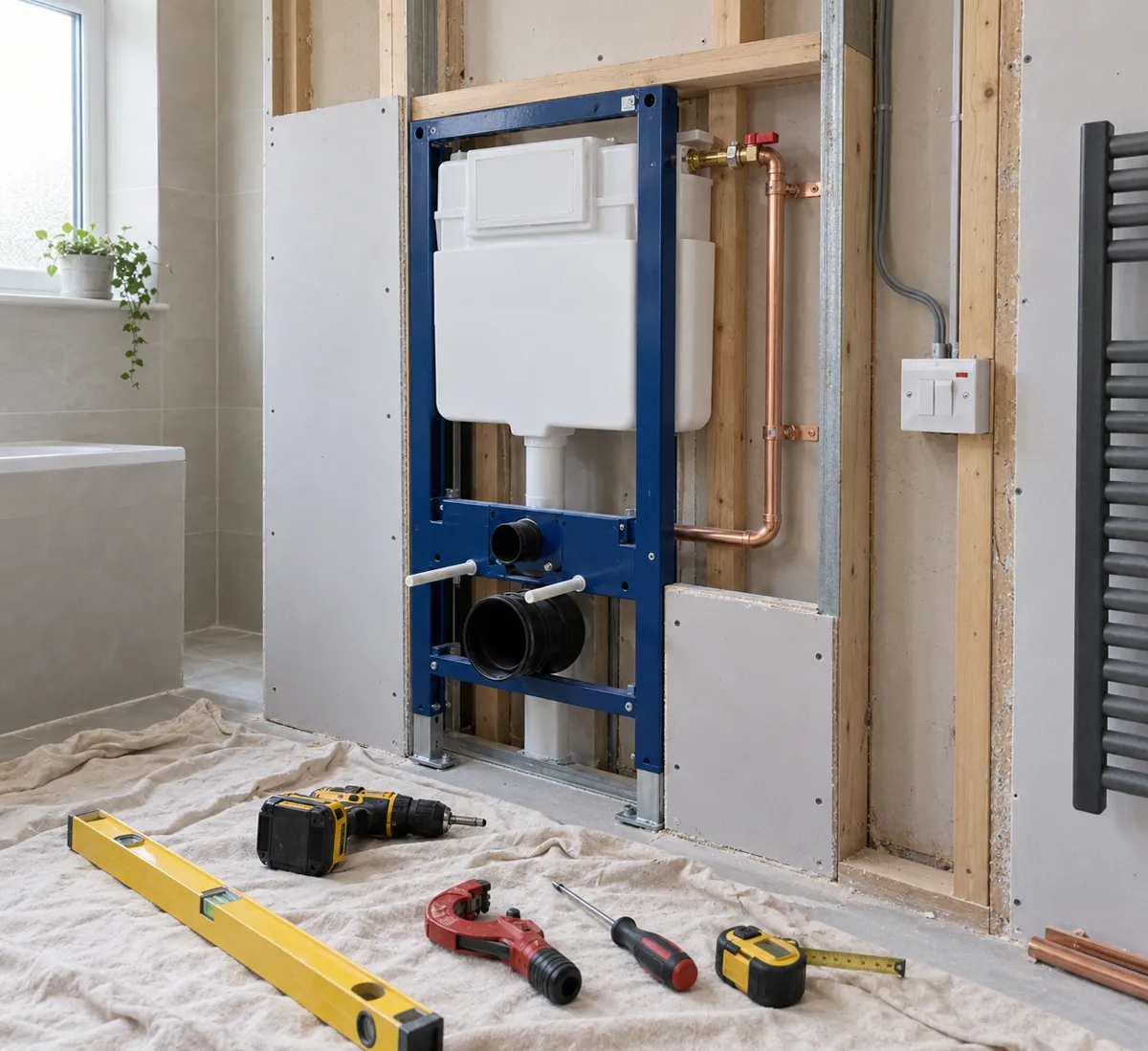
Wall-hung smart toilet in a bathroom refit. The toilet might be £1,500 to £3,000. Add a concealed frame, plumbing labour, boxing-in and tiling, plus a new power supply routed inside the wall. The total can easily be double the toilet's price, which is why this option makes most sense when you are refitting anyway.
Power: the usual stumbling block
Every electric seat and smart toilet needs mains power beside the toilet. Do not assume there is a suitable socket there: the wiring rules keep ordinary sockets well away from baths and showers.
The usual solution is a fixed connection, such as a fused spur, fitted by an electrician. Part P applies in England and Wales, but their notification requirements are not identical. Ask the electrician which work needs notification in your location and who will handle it. The simplest route is an electrician registered with a competent person scheme, who can certify the work for you. Check the product's instructions for the protection it needs, which will normally include an RCD.
Running a lead in from another room is unsafe in a bathroom. If the seat you like comes with a plug, ask an electrician how to connect it properly.
Source: Welsh Government, Approved Document P: electrical safety in dwellings. For England, see Approved Document P for England. Wales has separate guidance, and Scotland and Northern Ireland have different rules; ask a local electrician.
Water and backflow
Bidet seats usually connect to the same cold water pipe that feeds the cistern, using a T-piece supplied with the seat. That part is simple. The important detail is backflow.
Under UK water regulations, a spray used for washing next to a toilet is treated as the highest contamination risk (fluid category 5). That means dirty water must never be able to flow back into the drinking water supply. Some seats and toilets have suitable protection built in, often an air gap inside the unit. Others need extra protection fitted in the plumbing.
Ask the seller to confirm in writing what protection the product has. Water Regs UK says bidet showers or douches adjacent to toilets are notifiable in Scotland and Northern Ireland and could be notifiable in England and Wales. Approved-contractor exceptions may apply. Ask your water supplier or an approved contractor about the exact product and installation before work starts.
Source: Water Regs UK: backflow protection for bidet sprays next to toilets.
Also check the water pressure range in the product's specification. Very low pressure, common in some older homes with a cold water tank in the loft, can give a weak wash.
Space, waste and access
- Pan fit (seats): see how to measure your toilet.
- Frame and wall (complete toilets): is there a wall that can take a concealed frame, and how far will the boxing-in stick out into the room?
- Waste pipe position: moving the soil pipe adds cost quickly. Product drawings are more reliable than headline dimensions.
- Room around the toilet: doors, radiators and vanity units can block the side where the hose and cable run.
- Access later: the isolation valve, filter and power connection all need to be reachable for servicing.
Questions to ask your installer
- Have you fitted this type of smart toilet or bidet seat before?
- Does the quote include both the plumbing and the electrical work, or do I need two trades?
- Who is checking the backflow protection and water pressure?
- Will the electrical work be certified, and who notifies building control if needed?
- Will fitting it this way keep the manufacturer's warranty valid?
- Is removal of the old toilet, making good and tiling included?
Ready to compare models?
Our comparison lists the fitting requirements and warnings for each of the eight products, so you can rule out ones that will not suit your bathroom.
Compare smart toilets and seats →