Shower toilet, bidet seat or bidet? UK terms explained
Shower toilet, WASHLET, bidet seat, bidet, douche: what UK shops mean by each, how each is plumbed, and why the old-fashioned bidet is often the simplest to fit.
Updated
Use this checklist when you are ready to shortlist a product: choose the type, measure your pan, check power and water, then ask the seller about support. For the terminology, product types and wider UK installation context, start with our Japanese toilets UK guide.
If your current toilet is in good condition and there is a way to get power to it, an electric bidet seat is the cheapest and simplest way to get a warm wash. A complete smart toilet may suit a replacement or refit, but an installer should assess the exact model and what existing services can be reused.
This replaces your normal toilet seat. It has a heater for the wash water, a nozzle that slides out underneath you and usually a heated seat. Better models add a warm-air dryer, a deodoriser and a remote. It connects to the toilet's cold water feed with a T-valve and needs mains power.
Good if: you like your current toilet, rent or may move, or want to spend a few hundred pounds rather than a few thousand. Watch for: a visible cable and hose at the side of the toilet, and a pan shape that the seat does not suit.
The wash technology is built into the toilet itself. In the UK most are wall-hung, with the cistern, water feed and power hidden in a frame behind the wall. They look neater, are easier to clean around and often have a better wash and quieter operation.
Good if: you are refitting the bathroom or replacing the toilet anyway. Watch for: the cost of the frame, boxing-in, tiling and a new electrical supply inside the wall. Price the frame, connections and making good separately from the product.
A thin plate that sits between your pan and your existing seat, with a lever-operated spray from the cold feed. There is no warm water, no heated seat and no dryer.
Good if: there is no power near the toilet, or you want to see whether you like washing before you spend more. Watch for: cold water, which many people find unpleasant in winter, and the same backflow rules as any other bidet.
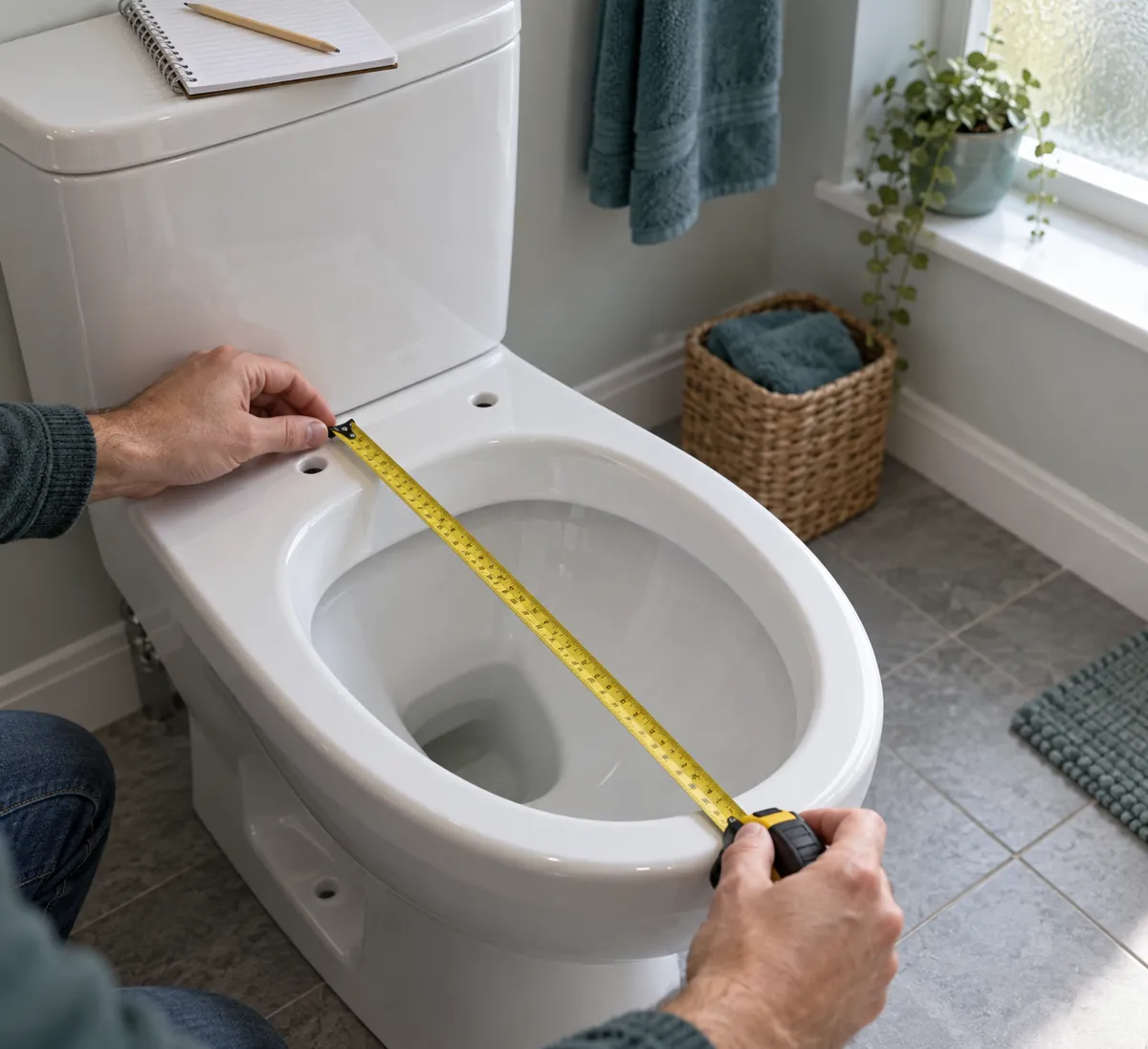
Retailers often say their seats fit "most UK toilets". That can be true and still not include yours. Before ordering a bidet seat, write down:
A specialist retailer will usually confirm fit if you send your measurements and a picture of the pan from above and the side. Get the answer in writing. If they will not confirm, check the cancellation and return terms before opening or fitting it. Change-of-mind returns and rights for faulty or misdescribed goods are different; seller terms do not remove statutory rights. See GOV.UK guidance on returns.
For a complete smart toilet, the questions are different: do you have a suitable wall for a concealed frame, where does the soil pipe exit, and can power and water be run to the frame? That is a job for your installer to confirm on site. See installation and costs.
Use the bidet seat comparison by pan fit to build a shortlist. If you are considering a TOTO seat, the TOTO WASHLET model and pan-code guide explains its specific pairings.
Nearly every seat has more buttons than you will use. These matter most in daily use:
Drying performance varies by model and user; try a demonstration if this feature matters to you. Automatic lids, night lights, app control and deodorisers are pleasant but rarely the reason to choose one model over another. Features explained in more detail.
A smart seat is an electrical appliance that lives in a wet room, so after-sales support matters more than on a normal toilet. Before buying, find out:
Once you know the type, check what the plumbing and electrical work is likely to cost, so the product price does not mislead you.
Installation and costs →Shower toilet, WASHLET, bidet seat, bidet, douche: what UK shops mean by each, how each is plumbed, and why the old-fashioned bidet is often the simplest to fit.
Updated
A non-electric bidet attachment looks like the easy option, but UK water pressure, cold water and backflow rules can make it the harder one. How to choose.
Updated
Seat or full Japanese toilet? How UK power, water rules, pan size and repair support decide it, with real cost ranges and a survey you can do this week.
Updated