This guide uses AI-assisted desk research and drafting, not hands-on testing or professional installation advice. Read our editorial standards or send a correction.
A non-electric bidet attachment costs a fraction of an electric seat, fits under the seat you already have, and doesn't need an electrician.
So why isn't everyone buying one?
Because in a typical UK bathroom, the "simple" option runs into three things the product listings rarely mention. And one of them is a regulation that the expensive electric seats are often built to meet, and the cheap attachments usually aren't.
Quick answer: A non-electric bidet attachment can work in a UK home if your toilet is fed from the mains, you're happy with cold water, and the installation has proper backflow protection. An electric seat costs more and needs a fixed power supply, but it heats the water, and some state built-in Type AB air gap protection on their specification. Check how your toilet is fed before you choose either.
These are the questions I'd want answered before buying either one. Each gets a straight answer below:
- Will it have enough pressure on my toilet?
- How cold will the water actually be?
- Is a cheap attachment even allowed under UK water rules?
- Why are some electric seats easier to fit legally than a £30 attachment?
- When is the non-electric option genuinely the better choice?
The cheap option and the dear option solve different problems
The usual comparison goes like this. Non-electric: cheap, easy, no power, cold water. Electric: expensive, needs power, warm water, more features.
It's not wrong. It's just incomplete, because it treats the two as the same thing at different prices.
They're not. They're different connections to your water supply, with different jobs to do before the water ever reaches you.
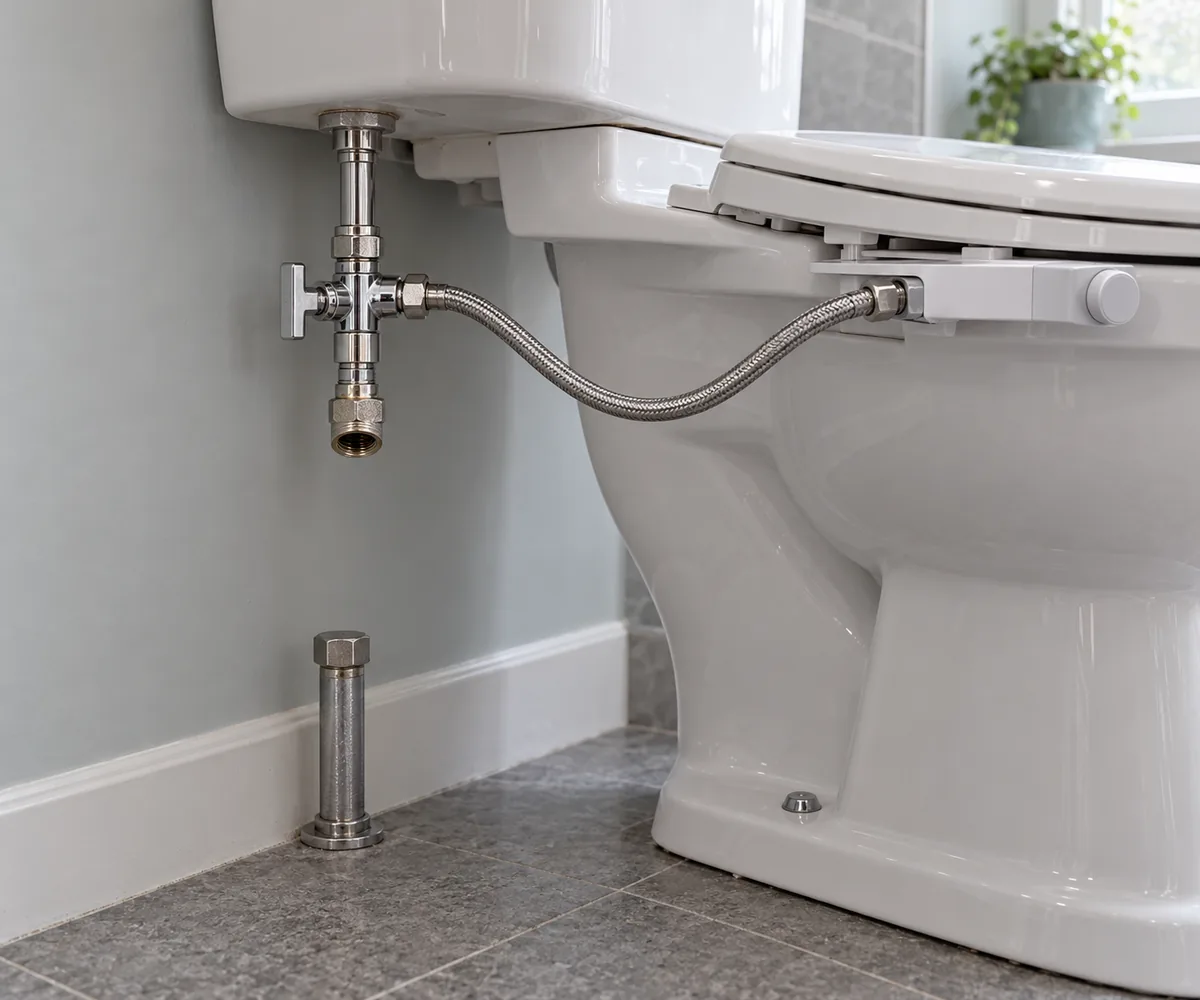
A non-electric attachment is basically a valve and a nozzle. It takes water from the pipe that feeds your toilet cistern, usually through a T-piece, and sends it straight to the spray. Whatever pressure and temperature arrive at that pipe is what you get.
An electric seat usually has more going on inside. It heats the water, and on some models it stores or passes the water through an internal arrangement before it reaches the nozzle. That matters for comfort. It also matters for the rules, as we'll get to.
Your toilet's water feed decides more than the product does
Before you look at any product, find out how your toilet cistern is fed. This one fact predicts most of what will go right or wrong.
UK toilets are commonly fed in one of two ways:
- Mains cold. The cistern fills from the rising main, at mains pressure.
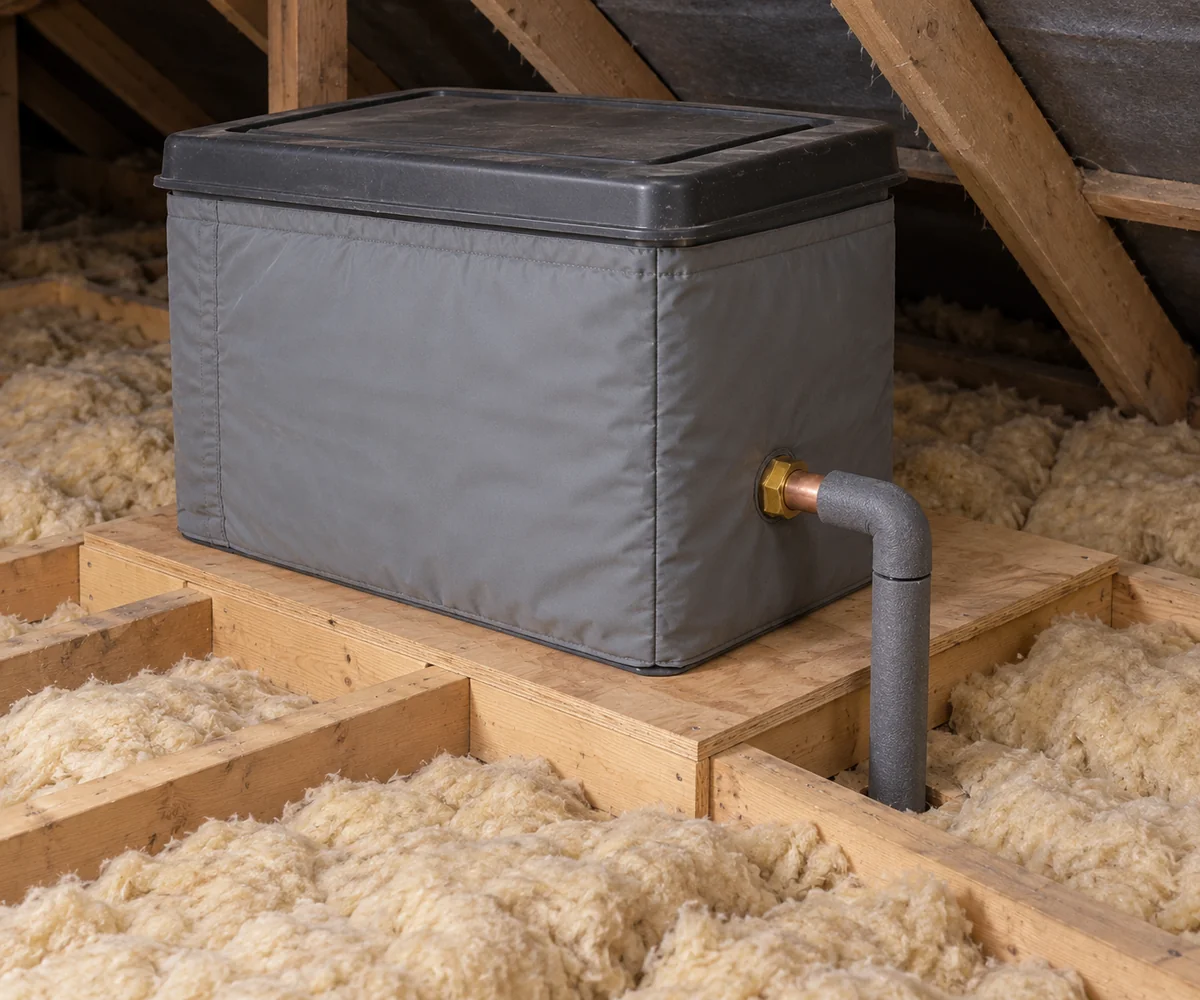
- Tank-fed, or gravity. The cistern fills from a cold water storage tank, often in the loft. The pressure comes only from how high the water in the tank sits above the toilet.
Here's the physics in plain terms. A column of water creates about 0.1 bar of pressure for every metre of height. So if the water level in your loft tank is two metres above the toilet's inlet, you have roughly 0.2 bar to play with.
That's why a spray can feel fine on a downstairs mains-fed toilet and weak on an upstairs tank-fed one in the same house.
Non-electric attachments have no pump. They depend entirely on the pressure at that pipe. Read each product's stated minimum pressure, and if it doesn't state one, ask the seller before buying.
Electric seats state pressure ranges too. Geberit's specification plate for the AquaClean Sela complete shower toilet, shown in its housekeeper and cleaning guide, lists 0.1 to 1 MPa, which is 1 to 10 bar. So electric doesn't automatically solve low pressure either. Check the numbers against your supply whichever route you take.
Find out how your toilet is fed in five minutes
- Lift the cistern lid, if you can do so safely. Look at the pipe coming into the fill valve.
- Follow that pipe as far as you can see it. Under the floor, into the wall, or up towards the ceiling?
- Find the isolation valve on that pipe. It's often a small valve with a slot you turn with a screwdriver. Don't turn it yet.
- If you have a loft tank, check whether the house still uses it for cold water. Ask a plumber if you're not sure; some old tanks are disconnected but left in place.
- Watch the cistern refill after a flush. A very slow refill can hint at low pressure or a restriction, though it isn't proof.
Write down what you find. You'll need it for the seller and the plumber.
Cold water means cold
This sounds obvious until you're sitting on it in January.
A non-electric attachment on a cold feed delivers water at whatever temperature it arrives from the supply. It does nothing to warm it.
Some attachments offer hot and cold connections. To use those, you need a hot water pipe you can bring to the toilet. In many UK bathrooms, the nearest hot pipe goes to the basin, and running a hose or new pipework from there is a plumbing job, not a five-minute fit. Water Regs UK also says that hot supplies to a bidet shower need the same high level of backflow protection as cold.
Rather than guess what "cold" feels like, measure it.
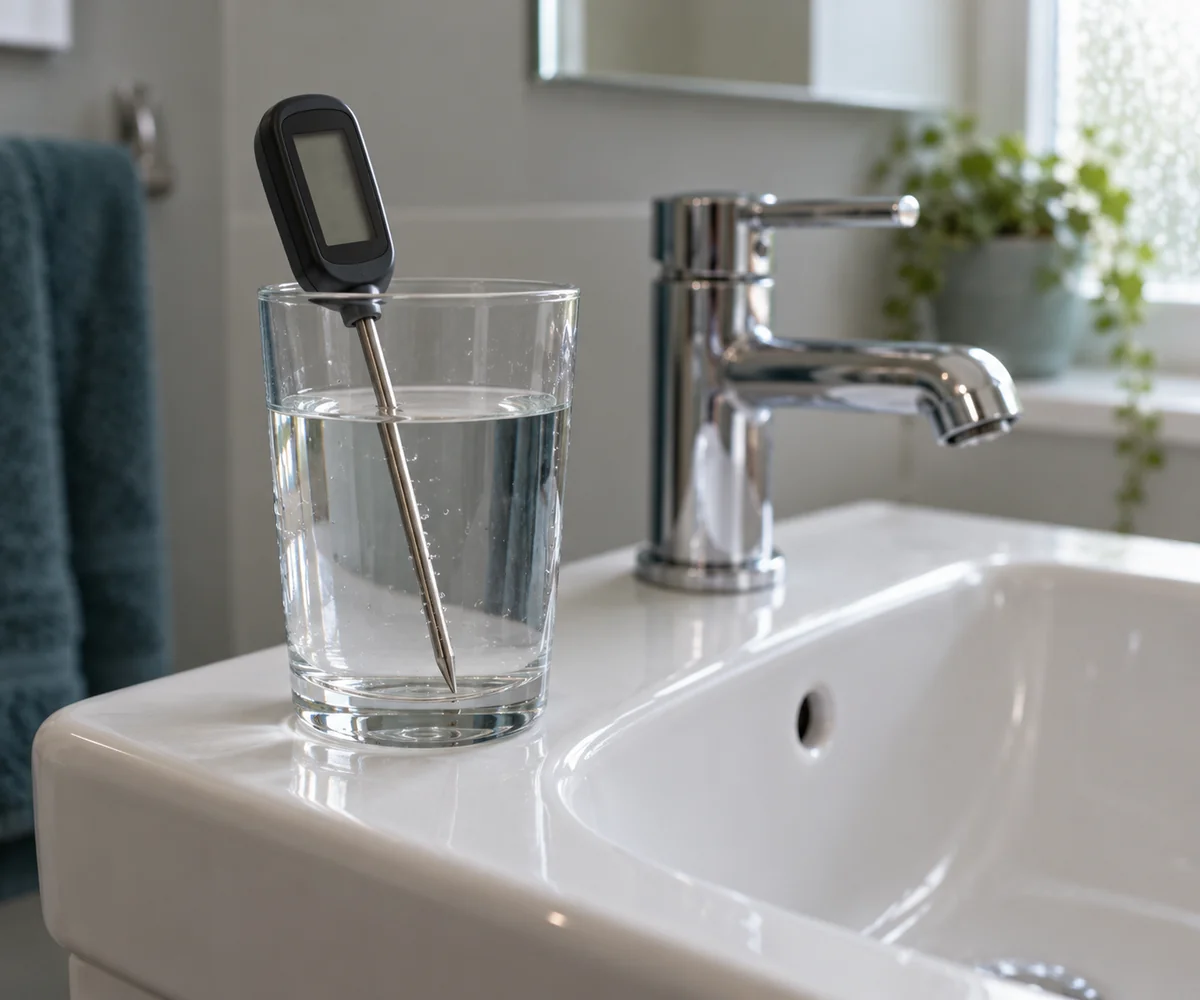
Run the cold tap nearest the toilet for a minute, fill a glass and put a kitchen or cooking thermometer in it. Do it once now and once in the coldest month. That's the temperature a cold-only attachment will deliver.
Some people genuinely don't mind. Others try it once in winter and never again. You'll know which you are once you've got that number.
The rule almost nobody mentions: fluid category 5
This is the part most "best bidet attachment" lists skip entirely, and it's the most important.
UK water fittings rules are designed to stop contaminated water flowing backwards into the drinking water supply. They sort risks into five fluid categories. Category 5 is the most serious: water that could carry harmful germs.
Water Regs UK says that a bidet shower or douche next to a toilet is "considered to be a fluid category 5 risk". It says both the cold and, where appropriate, the hot supplies must be fed through "a suitable form of fluid category 5 backflow prevention". Its example is "a break tank arrangement incorporating a Type AB air gap".
In plain English: there needs to be a physical gap between your drinking water supply and the water that comes near the toilet bowl. A one-way valve on its own isn't the example given.
Now think about how a typical non-electric attachment connects. A T-piece splits the cistern feed. One branch goes on to the cistern, which has its own arrangement. The other branch goes straight to the bidet nozzle, which sits inside the bowl.
When I searched, I couldn't find a cheap non-electric attachment sold in the UK that states how it meets fluid category 5 or includes a Type AB air gap. I can't say every attachment lacks one. But if a product doesn't state how it meets category 5, assume it doesn't, and ask.
Why some electric seats are the easier legal route
Here's the twist that makes the "simple" option the complicated one.
Look at the specification plate Geberit prints for the AquaClean Sela. It includes "EN 13077 / Typ AB". EN 13077 is the European standard for Type AB air gaps, which is the kind of protection Water Regs UK gives as its example.
So that complete shower toilet states the relevant protection on its own label. The water passes through an internal air gap before it reaches the nozzle.
Not every electric seat states this, and I haven't checked them all. But it does flip the usual assumption. The expensive option can be the one that brings its own backflow protection with it, while the cheap one leaves you to sort it out.
That's the answer to the fourth question at the top. Some electric seats are easier to fit legally because the air gap is built in.
Does this need notifying?
Water Regs UK says installing a bidet shower or douche "is notifiable in Scotland and Northern Ireland and could be notifiable, for example as material change of use, in England and Wales". It also notes that work by an approved contractor may not need separate notification, but that the owner or occupier still has a legal obligation to make sure it complies.
I'm not going to tell you that a particular attachment in your particular home does or doesn't need notifying. Nobody can from a web page. Ask your water supplier or an approved plumber before you fit anything.
Electric seats bring their own catch: the power point
If you're now leaning towards electric, here's the trade-off.
An electric seat needs mains power right beside the toilet. UK bathroom wiring rules keep ordinary sockets away from water, and most bathrooms don't have a suitable connection near the toilet. The usual answer is a fixed connection such as a fused spur, fitted by an electrician.
Our Japanese toilets guide explains what that work involves and why you should never run an extension lead into a bathroom. Our installation costs page gives the planning figures we use.
So the real comparison isn't "£30 versus £500". It's closer to this:
| Non-electric attachment | Electric bidet seat | |
|---|---|---|
| Water temperature | Whatever arrives at the pipe, usually cold | Heated |
| Power needed | None | Fixed supply by the toilet, usually by an electrician |
| Pressure | Depends entirely on your supply | Depends on your supply, within the seat's stated range |
| Backflow protection | Often not stated; check before fitting | Some models state a Type AB air gap; check yours |
| Fits under your existing seat | Usually, between seat and pan | Replaces your seat; must suit your pan's shape and fixings |
| Extras | Usually none | Varies: heated seat, dryer, deodoriser, remote |
| Plumber needed | Recommended, for the backflow question | Recommended, for the water connection |
Fit matters for both, in different ways
A non-electric attachment usually sits between your existing seat and the pan. That sounds universal, but it isn't.
It can lift the seat slightly, which some seats tolerate and others don't. It needs room at the back for the hose and valve. And the nozzle has to sit where it can actually reach.
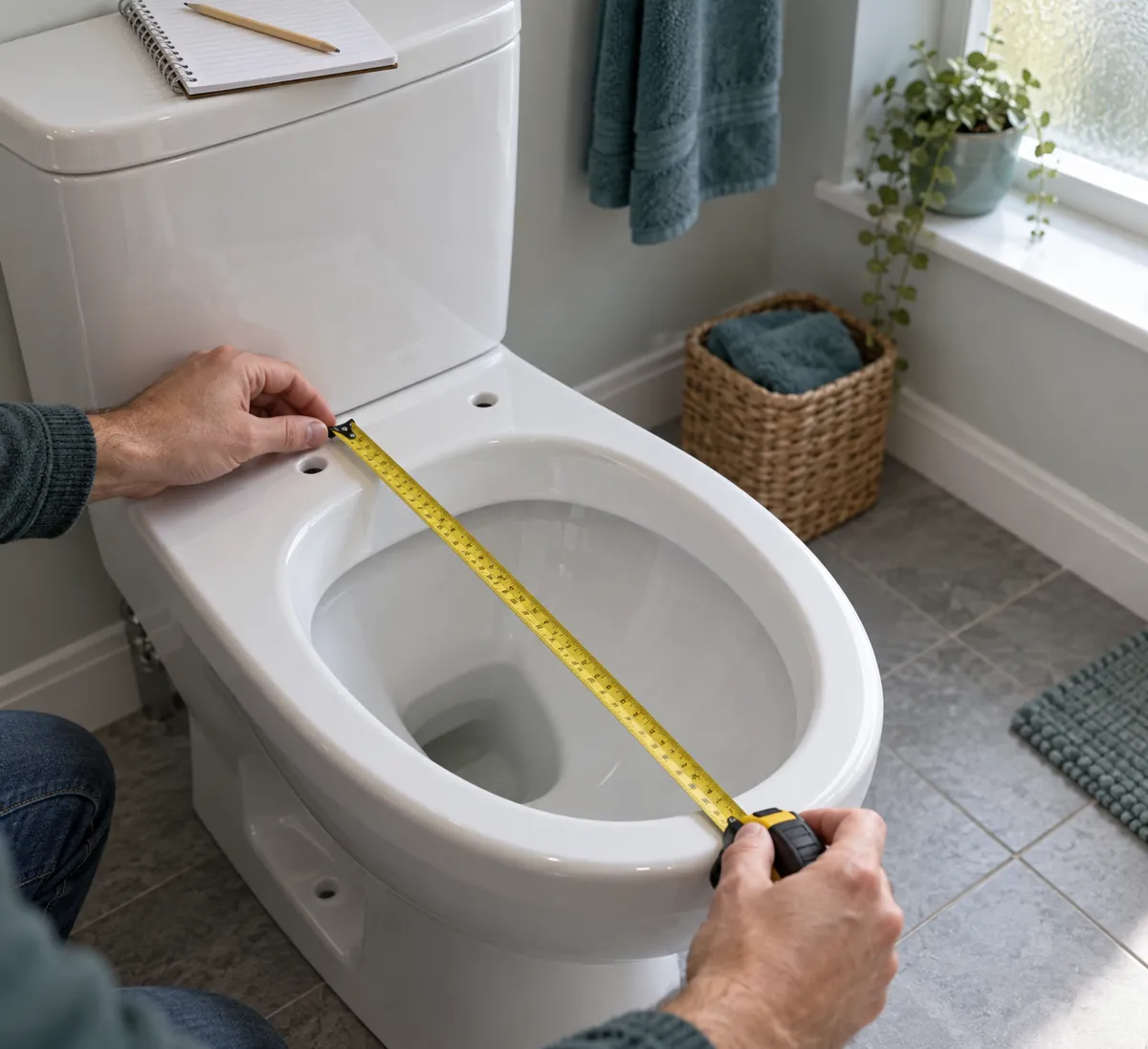
An electric seat replaces your seat completely. It has to match your pan's shape, size and fixing-hole spacing. UK pans are often round rather than elongated, and "fits most toilets" claims are mostly written for other markets.
Either way, measure before you buy. Our best bidet seats guide walks through the pan check step by step, including what to measure and how to read the numbers.
Choose your route this week
Here's the order I'd do it in. Steps one to three cost nothing.
- Find out how your toilet is fed, using the five-minute check above. Mains or tank? Note where the isolation valve is.
- Measure your cold water temperature with a kitchen thermometer, as described above. Decide honestly whether you'd use it in winter.
- Look for power. Is there any fixed electrical point near the toilet? If not, ask an electrician what it would take. If the answer involves chasing tiles you're not ready to lose, that pushes you towards non-electric, at least for now.
- Shortlist products that state their backflow protection. For each one, look for "fluid category 5", "Type AB" or "EN 13077" in the listing or manual. Ask the seller directly if you can't find it.
- Check the pressure numbers. Compare each product's minimum pressure with what you found in step one. If you're on a tank-fed upstairs toilet, be sceptical of any product that doesn't give a number.
- Measure your pan and match it to the product's stated fit.
- Book a plumber to check the backflow arrangement and make the connection. Ask them to confirm in writing what protection is in place.
Questions to send the seller before you pay
Copy these into an email or the retailer's chat. A seller who can't answer them in writing has told you something useful.
- How does this product meet fluid category 5 backflow protection for use next to a toilet in the UK?
- Does it include a Type AB air gap, and is that stated in the manual or on the product?
- What is the minimum and maximum water pressure it needs, in bar?
- Is it cold only, or does it need a hot supply for warm water?
- What are the exact dimensions, and what pan shapes and fixing-hole spacings does it suit?
- For an electric seat: what power connection does it expect, and what is its maximum power draw?
- What is the warranty, and who handles claims in the UK?
- Can I return it if it turns out not to fit, and on what terms?
When non-electric really is the better choice
I don't want to talk you out of non-electric altogether. There are good reasons to choose it.
- You can't get power to the toilet without major work, and you want a wash now rather than at the next refit.
- You're renting and can't make electrical changes. Ask your landlord in writing first, and mention the plumbing.
- You're testing the idea. You're not sure anyone in the house will use a bidet, and you'd rather find out cheaply.
- Your bathroom is in a holiday let or garden room where a cold wash in summer is fine and nobody uses it in winter.
In each case, the backflow question still applies. A non-electric attachment is cheaper to buy, not exempt from the rules.
Mistakes that make either option disappointing
- Buying on "fits all toilets". Measure first.
- Ignoring the feed. A tank-fed upstairs toilet can turn a good attachment into a dribble.
- Assuming electric means warm and strong. Warm, yes. Strong still depends on your supply.
- Skipping the plumber to save money. The backflow arrangement is the part you can't see and can't easily check yourself.
- Running a hot hose from the basin. It's tempting for warm water. It also needs proper protection under the same rules.
- Forgetting about limescale. Both types have small nozzles. In hard water areas, our limescale guide explains how to keep a spray working.
So, which should you buy?
Back to the opening questions.
Pressure depends on how your toilet is fed far more than on the product, so check that first. Cold water is exactly as cold as your supply, and a thermometer will tell you in a minute. A cheap attachment isn't banned, but its installation has to meet fluid category 5, and many listings don't say how. Some electric seats make that easier because they state a Type AB air gap on their own label.
And non-electric is the better choice when power is out of reach, you're renting, or you're testing the idea, as long as the plumbing is done properly.
If you've decided on electric, the next step is choosing a seat that fits your pan. That's what our best bidet seats for UK toilets guide is for.
Common questions
Do non-electric bidet attachments work in the UK?
They can, but check three things first: that your toilet's cold feed has enough pressure, that you're comfortable with an unheated wash, and that the installation has suitable backflow protection. Water Regs UK treats a bidet shower or douche next to a toilet as a fluid category 5 risk, which needs a high level of protection.
Is a non-electric bidet attachment legal in the UK?
The product isn't banned, but the installation has to meet the water fittings rules. Water Regs UK says bidet showers or douches next to toilets are fluid category 5 and need suitable protection such as a break tank with a Type AB air gap. Many cheap attachments don't state any. Ask the seller and a plumber before fitting one.
Will a non-electric bidet work on a low-pressure toilet?
It depends on how your toilet is fed. A cistern supplied from a loft tank has much lower pressure than one on mains cold, because pressure from a tank comes only from the height of the water above the outlet. Check how your toilet is fed and the attachment's stated minimum pressure before buying.
Can a non-electric bidet attachment give warm water?
Only if it has a hot water connection and you have a hot supply you can bring to the toilet, which is rare in UK bathrooms. Water Regs UK says hot supplies to a bidet shower also need fluid category 5 protection. Most non-electric attachments are cold water only.
Is an electric bidet seat worth the extra cost over a non-electric attachment?
If you want warm water, a heated seat, or built-in backflow protection, often yes. Some electric seats state a Type AB air gap on their specification plate. The trade-off is a fixed power supply next to the toilet, which usually means an electrician. If you can't get power there, a non-electric option may be your only route.